Written by Tom Taylor, Director of Canada Rope Access Industrial Services at Acuren, this series explores the business side of asset integrity and maintenance. Drawing from more than a decade of experience supporting major industrial operators across Canada, the series focuses on the operational decisions, technologies, and execution models that influence cost, uptime, risk, and long-term asset performance.
I’ve never written a blog before. But after more than a decade leading sales and business development at Acuren Canada, I’ve had a front-row seat to how asset integrity decisions impact business outcomes: cost, risk, uptime, and ROI.
I’ve also seen how the “business case” can get lost between the boardroom and the field. So, on my 13th anniversary at Acuren, I’m starting a series on the business of asset integrity and how asset management decisions drive ROI across large industrial enterprises.
Background
In early 2015, I took the Sales Director role for Acuren Canada at what felt like the worst possible time. Oil prices had been cut nearly in half, customers were in cost-containment mode, and we’d just lost our biggest client in the oil sands.
In response, our Canadian COO, Tal Pizzey, set a clear direction: “Build programs that measurably reduce our customers’ cost to operate.” That mantra has stayed with me through more than a decade of leading sales and business development, helping build programs that have delivered tens of millions of dollars in avoided maintenance, access, and downtime-related costs.
Rope Access as a Lever
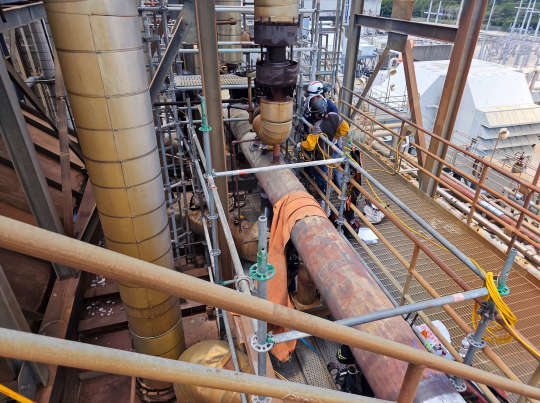
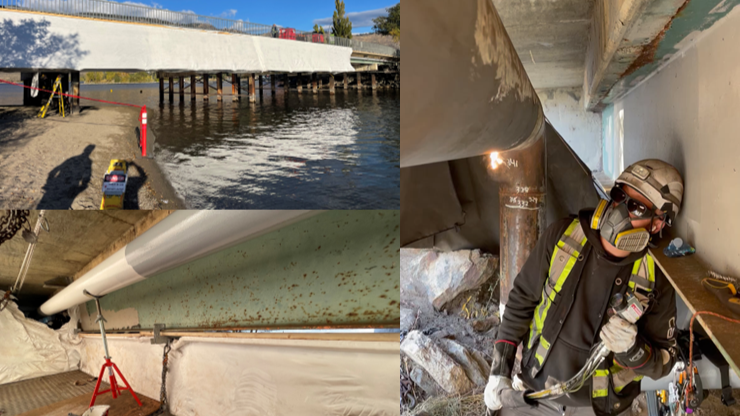
Around the same time, Acuren had recently acquired Remote Access Technologies (RAT), a leading rope access provider. We had a powerful lever to reduce costs across every industry we serve. Integrate rope access with engineering, inspection, and industrial trades to reduce setup costs, compress schedules, and keep more equipment available. In many cases, we reduced access costs by 30–70%.
A simple example made the economics obvious: lightbulbs, often 100 feet above the ground, where scaffolding can cost $ 20,000 or more. A rope crew of three could change four lights in a shift for $3750. Lower cost, faster execution, and less exposure from repeated scaffold builds.
From there, the scope scaled quickly. We moved into major mechanical work, including complete wear-plate changeouts on massive oil sands surge bins, cutting days off turnaround schedules. And when the work required a platform or containment, we used alternative access systems like V-Deck™ to support blasting-and-coating work on a separation cell—saving 18 days on one turnaround.
The Unexpected Benefit: Streamlined Execution
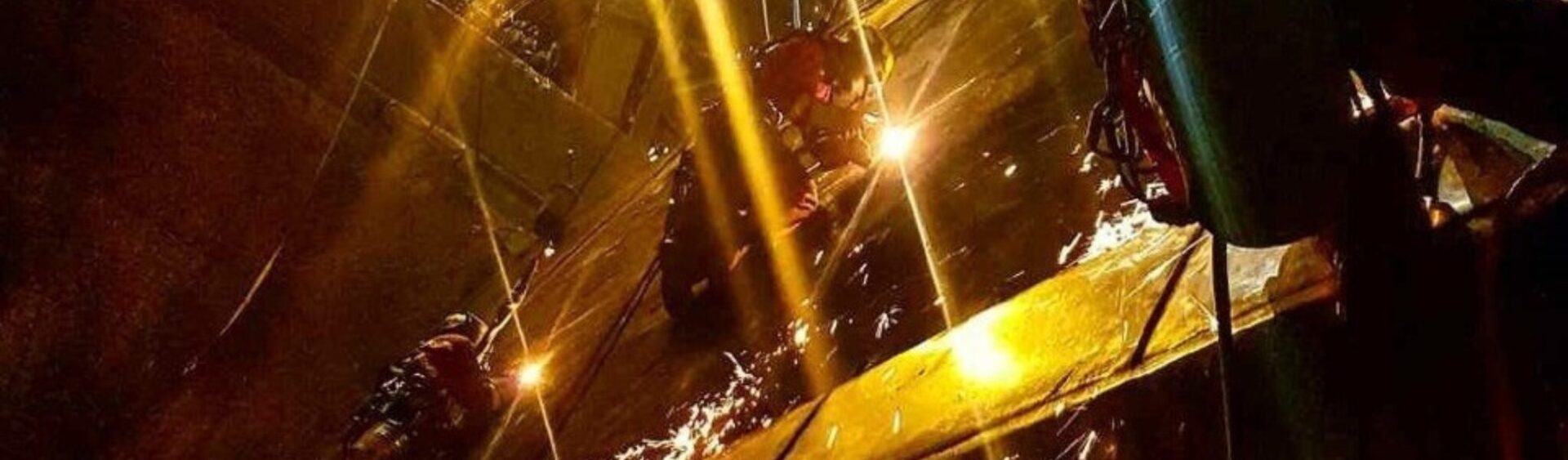
Once you can execute more scope from ropes, the traditional handoff model of access → inspect → repair starts to break down. We moved toward integrated crews: one team planning the job, executing access, performing inspection, and completing repairs in a single workflow. Fewer interfaces. Less waiting. Better scope control. Better predictability for operations.
That model has now scaled into program-based integrity work that combines engineering, inspection, and repairs under one structure, including structural integrity programs in mines. The goal is simple: focus spending where it reduces the most risk, protects uptime, and improves ROI.
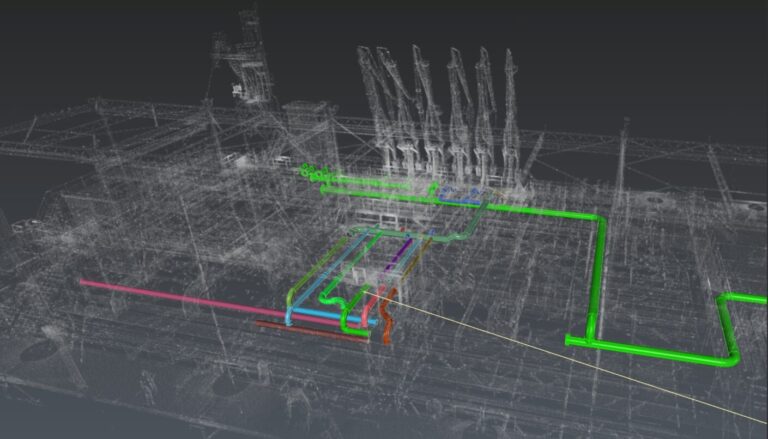
Today, those programs are increasingly technology-enabled with drones, remote sensors, digital twins, and AI. Still, the test is always the same: do they improve decisions, planning discipline, and field execution? Ultimately, do they “lower your cost to operate”?
Conclusion
Asset integrity decisions are ultimately business decisions. The organizations that connect engineering, inspection, access, and execution under a clear operational strategy are often the ones that reduce cost, improve uptime, and manage risk more effectively.
If you’d like to discuss any of the topics covered in this series, connect with our asset integrity experts today!