Home › Blog › Preparing for NDT in Canada 2026: Inspection Trends Impacting BC Assets
Preparing for NDT in Canada 2026: Inspection Trends Impacting BC Assets
By Chris Leslie
At Acuren, non-destructive evaluation (NDE) and non-destructive testing (NDT) are central to how we help clients manage risk, protect assets, and keep operations running safely. That is why we are attending NDT in Canada in Whistler, BC matters. It gives our team a chance to step back, see where inspection technology is heading, and bring practical insight back to the field.
What This Means for Our Work in BC
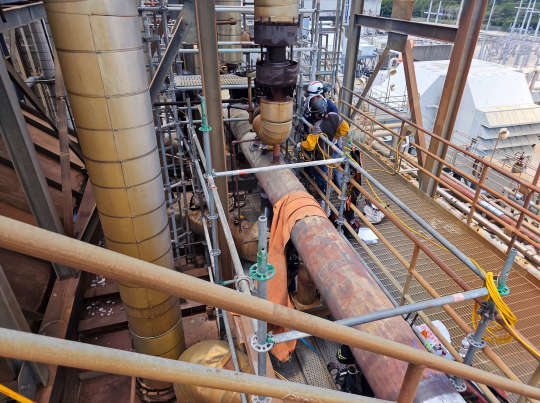
For our Pacific Region, that matters directly to the work we do across British Columbia. We support clients in Vancouver and throughout Northern BC, including major industrial corridors in Kitimat and Prince Rupert, where LNG, marine, energy, and infrastructure assets require dependable inspection and strong asset integrity programs. The most valuable conference sessions are the ones that connect directly to those challenges.
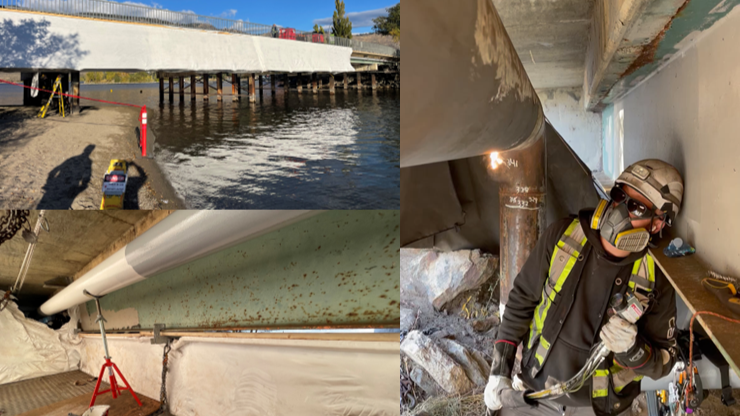
This year’s program does exactly that. Topics such as guided wave ultrasonics for suspended bridge cables, stress corrosion cracking in critical energy assets, and advanced ultrasonic imaging methods like Total Focusing Method (TFM) and Phase Coherence Imaging (PCI) are highly relevant to the environments we support in BC. These are not abstract technical discussions. They are real advances that can improve detection capability, increase reliability, and support better decisions in the field.
We are also seeing continued progress in eddy current testing for heat exchangers and tubing, digital radiography for weld quality, and newer inspection approaches for aerospace materials and composite structures. For clients operating LNG facilities, terminals, pipelines, and other high-consequence assets, these developments matter because better inspection supports better planning, lower risk, and stronger long-term performance.
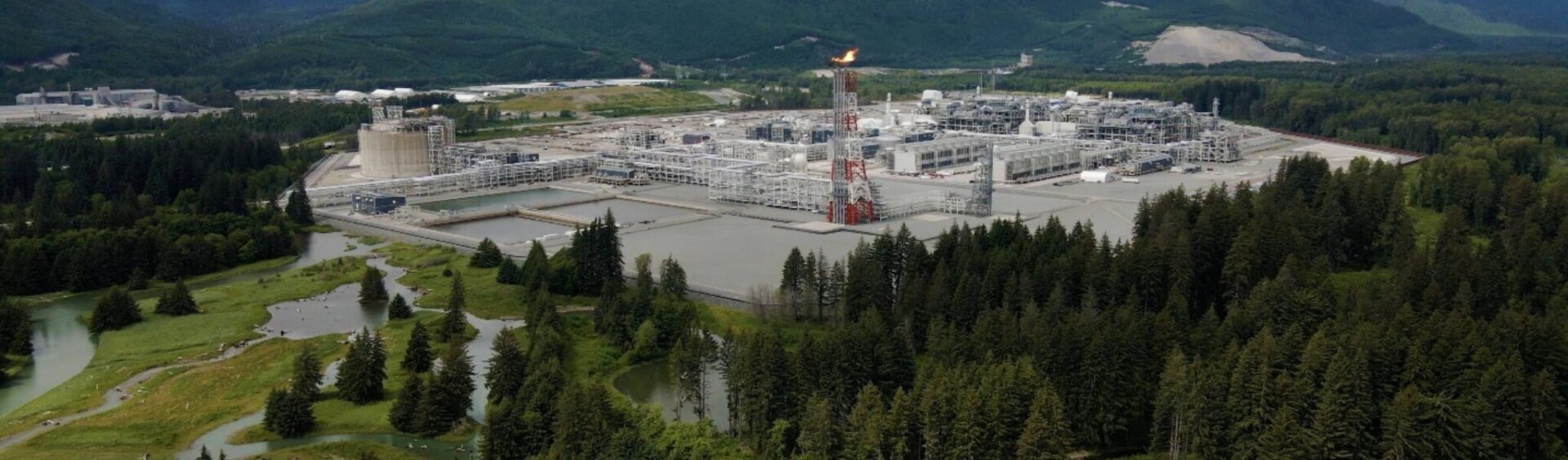
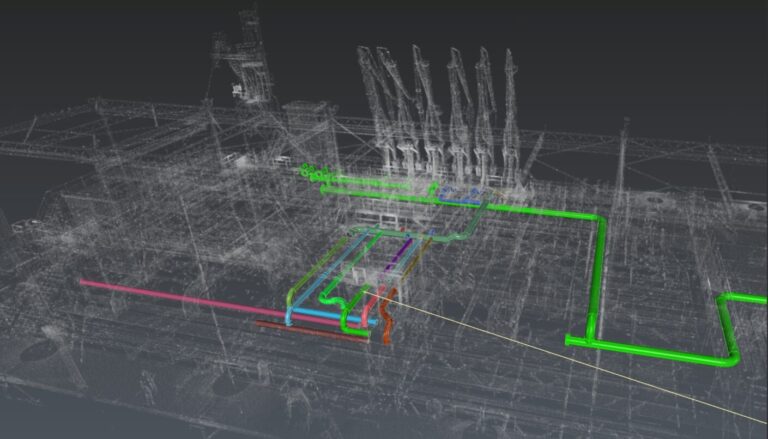
LNGC Kitimat, BC Acuren Pacific Region
Where Inspection Is Headed Next
One area I am watching closely is the integration of AI into NDE. Sessions focused on AI-assisted inspection and data interpretation reflect where the industry is moving. At Acuren, we see that as part of the next phase of inspection capability. Not as a replacement for experience and technical judgment, but to improve consistency, speed, and the interpretation of complex data.
I am also interested in newer inspection challenges that are quickly becoming more relevant across industry. Additive manufacturing defects, residual stress measurement using Magnetic Barkhausen Noise, and non-contact methods such as drone-based thermography are expanding what is possible. For large, remote, or difficult-to-access assets in Northern BC, including Kitimat and Prince Rupert, that have clear practical value.
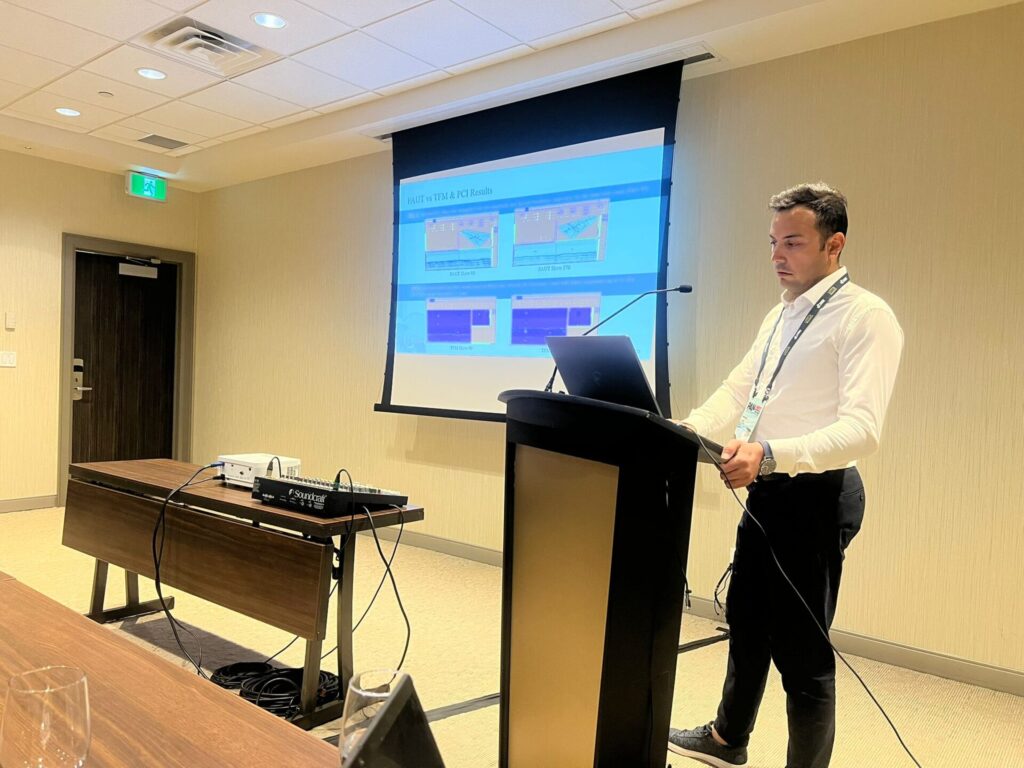
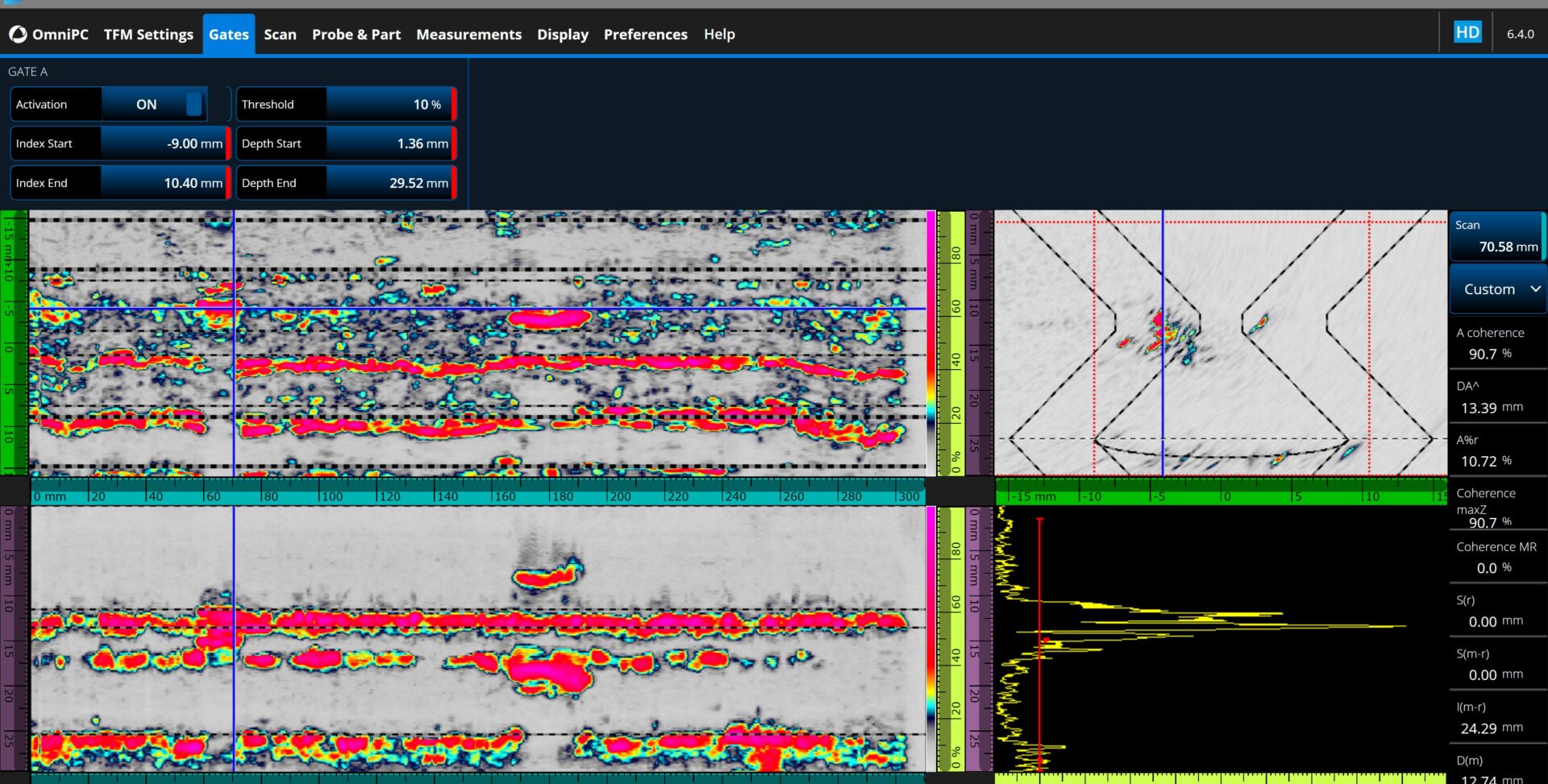
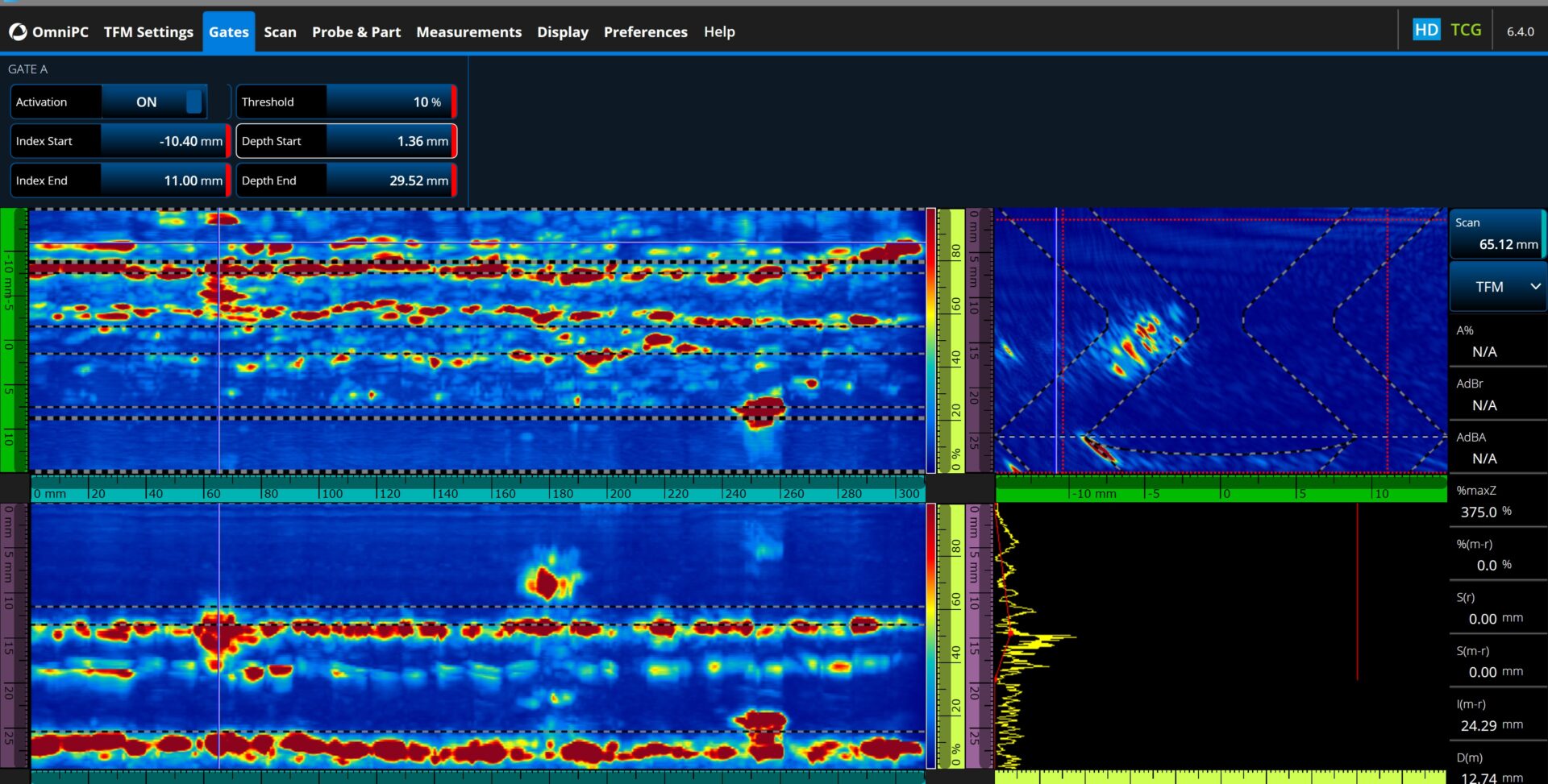
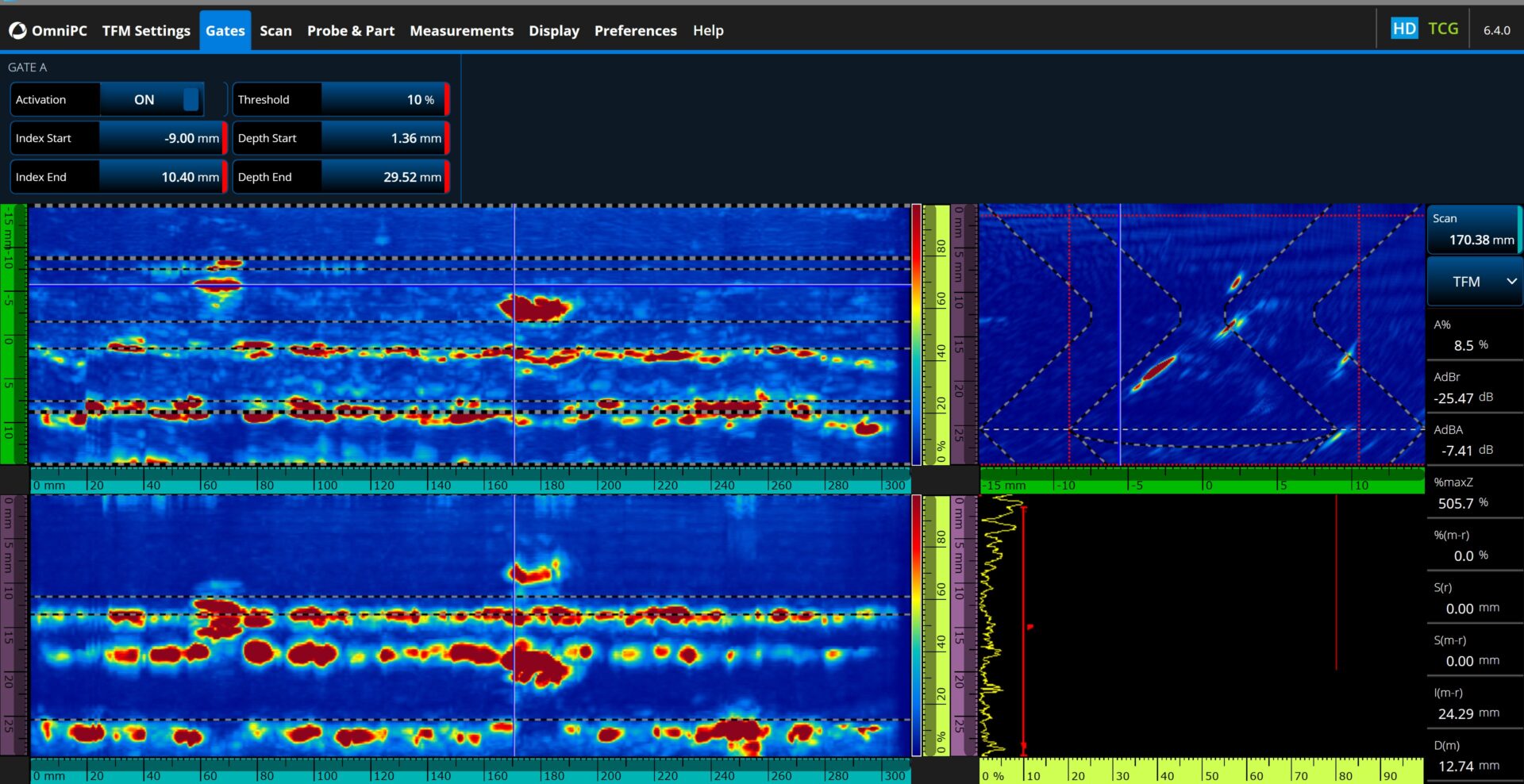
I am especially proud to see Hossien Taheri, Pacific Region ANDE SME, representing our team with his work on advanced ultrasonic inspection of additively manufactured materials. His presentation explores Full Matrix Capture (FMC)-based imaging and compares Phase Coherence Imaging (PCI) and Total Focusing Method (TFM) for detecting near-surface discontinuities in LPBF aluminum alloys.
Hossein Taheri - Pacific Region ANDE SME
Why PCI and TFM Matter in Practice
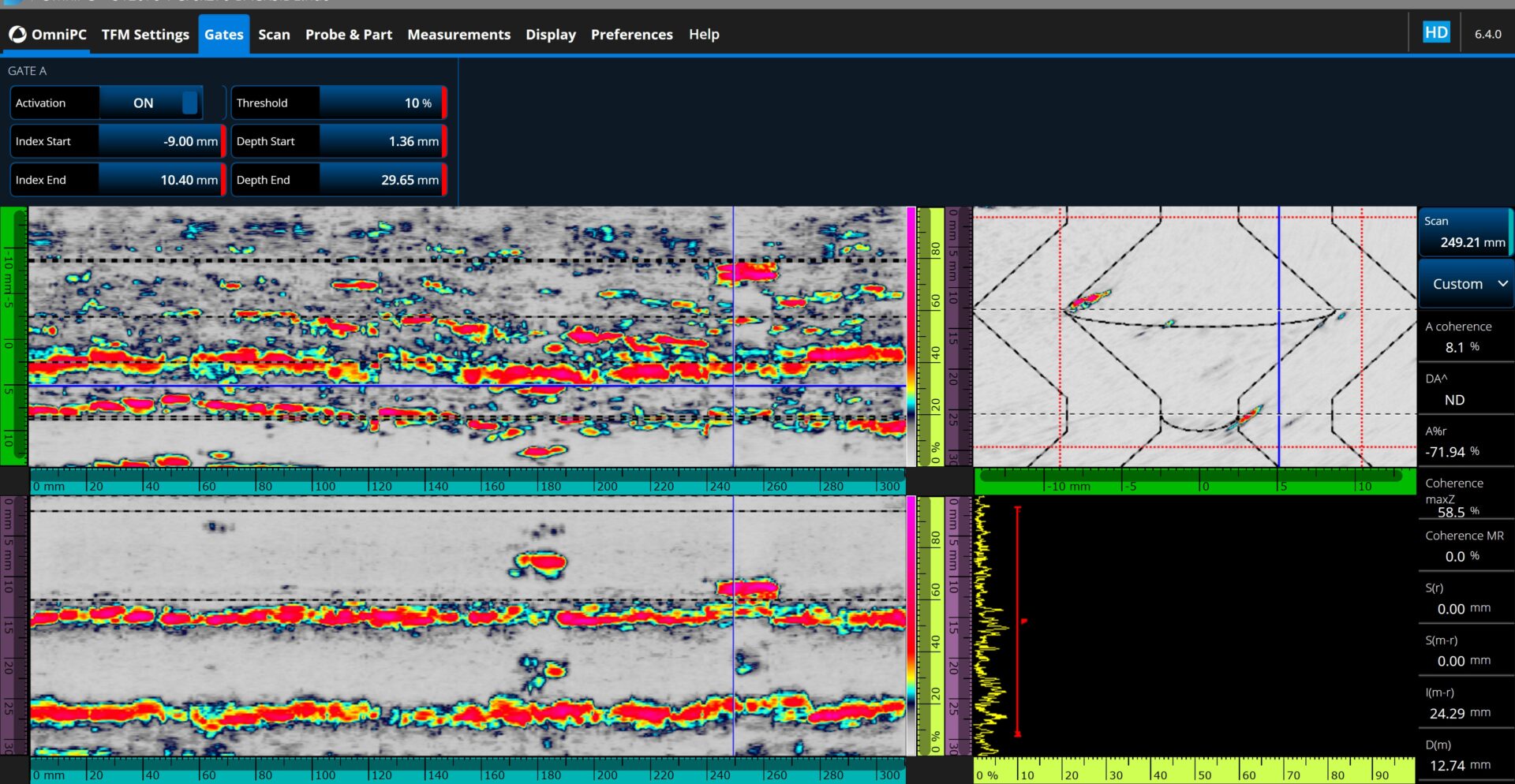
What makes this work important is the practical takeaway. PCI can improve the detection of shallow, difficult-to-resolve flaws by reducing noise and front-wall interference, while TFM provides the amplitude accuracy needed for reliable sizing and characterization. Used together, these techniques can improve inspection reliability as additive manufacturing becomes more common in critical applications.
(PCI Ultrasonic Image) Hossein Taheri - Pacific Region ANDE SME
(PCI Ultrasonic Image) Hossein Taheri - Pacific Region ANDE SME
Total Focusing Method Image (TFM) Hossein Taheri - Pacific Region ANDE SME
Total Focusing Method Image (TFM) Hossein Taheri - Pacific Region ANDE SME
Bringing These Insights Back to the Field
This is a strong example of the innovation coming out of our Pacific Region: practical, technically rigorous, and aligned with where the industry is heading.
For us, attending NDT in Canada is not just about being in the room. It is about strengthening how we deliver NDE in BC, how we support clients in Vancouver and Northern BC, and how we continue to meet the inspection demands of complex industrial and LNG projects in Kitimat, Prince Rupert, and across the region.
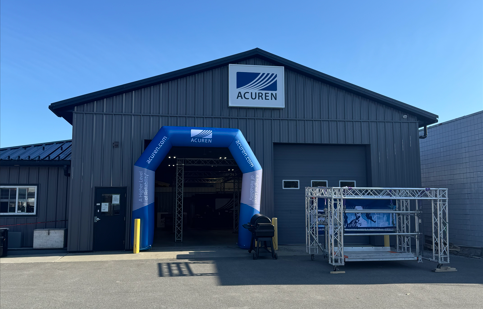
Acuren Office Kitimat BC - Acuren Pacific Region
Connect With our Experts
Our team is looking forward to the conversations, technical exchange, and ideas that come out of this event, and to bringing those insights back to our teams and clients.
As inspection technologies continue to evolve, staying connected to these developments is critical for making informed decisions in the field, whether that involves advanced ultrasonic methods, AI-assisted analysis, or new approaches to complex inspection challenges.
If you are evaluating inspection strategies, exploring new technologies, or planning work on critical assets, our team is available to help. Connect with an Acuren expert to discuss how these developments can support your operations.
Chris has over 15 years of experience in pipeline and industrial services across Canada. An ISO 9712 Ultrasonic Level 3 professional, he leads NDT operations across 13 branches, supporting more than 249 technicians and overseeing about $25 million in annual revenue. He is known for his hands-on leadership, focus on safe, high-quality execution, and commitment to team development.
Learn how weld quality, material verification, risk-based inspection, and commissioning controls can help protect reliability in accelerated power plant construction.
Compare one-owner and multi-vendor models for asset integrity work, and learn how an integrated team can reduce handoffs, delays, and turnaround costs.